Generator repair and diagnostics across SE Massachusetts.
Generac certified warranty technician on every service call. If your standby generator won’t start, runs rough, throws a fault code, or failed its weekly exercise, Tyler can diagnose and repair it. Same shop, same license, one call.
- Generac dealer + certified warranty technician
- 24/7 emergency service available
- Electrician licensed 2024
- Fully insured and bonded · Bristol, Plymouth, Norfolk
 Generac repair · Recent work
- Massachusetts Electrician
- Generac Dealer + Warranty Tech
- Panasonic Gold Mini Split Installer
- Mass Save Partner
One shop that diagnoses, repairs, and tests the unit before leaving your driveway.
Most generator service calls in southeastern Massachusetts end the same way: a technician reads the fault code, quotes a part, and schedules a second visit for the actual repair. Tyler arrives with a meter, a laptop running Generac’s service software, and the common fault parts already in the truck. The goal is a same-day repair on the first visit, not a diagnostic fee that leads to a return-trip quote.
Fault code diagnosis. Generac’s evolution and Nexus controllers log fault codes in a persistent event history. Tyler reads the live event log, not just the current fault on the display. A generator that shows “RPM Sense Loss” might have a corroded crankshaft sensor, a faulty ignition module, or a carburetor that’s running lean. Reading the history tells you which one fired first and how many times it’s recurred.
Transfer switch testing. A generator that cranks and runs but doesn’t pick up the load is almost always a transfer switch issue, not an engine issue. Tyler tests the ATS under load, verifies voltage on both utility and generator sides, and confirms the switch exercises correctly through the complete transfer sequence before calling the job done.
Warranty work handled in-house. As a Generac certified warranty technician, Tyler handles warranty service claims directly with Generac. Parts ordered under warranty ship to the shop, labor gets credited through Generac’s warranty portal, and you don’t end up caught between the manufacturer and a third-party repair shop trying to figure out who pays. Your unit is registered, your serial number is in the system, and the warranty claim closes clean.
Annual maintenance and load testing. A standby generator that only runs during outages still needs annual service: oil change, oil filter, air filter, spark plug inspection or replacement, battery voltage test, valve lash check at engine-hours intervals, and a documented load test that proves the unit carries your house’s actual electrical load. We issue a signed service record that satisfies Generac’s maintenance documentation requirement for keeping the factory warranty active.
Post-repair verification. After any repair, Tyler runs the unit through a complete exercise cycle with your home’s load on generator power before leaving. If the fault returns inside the exercise window, we stay and dig deeper. A repair that holds for ten minutes in the driveway but fails the next night is not a repair.
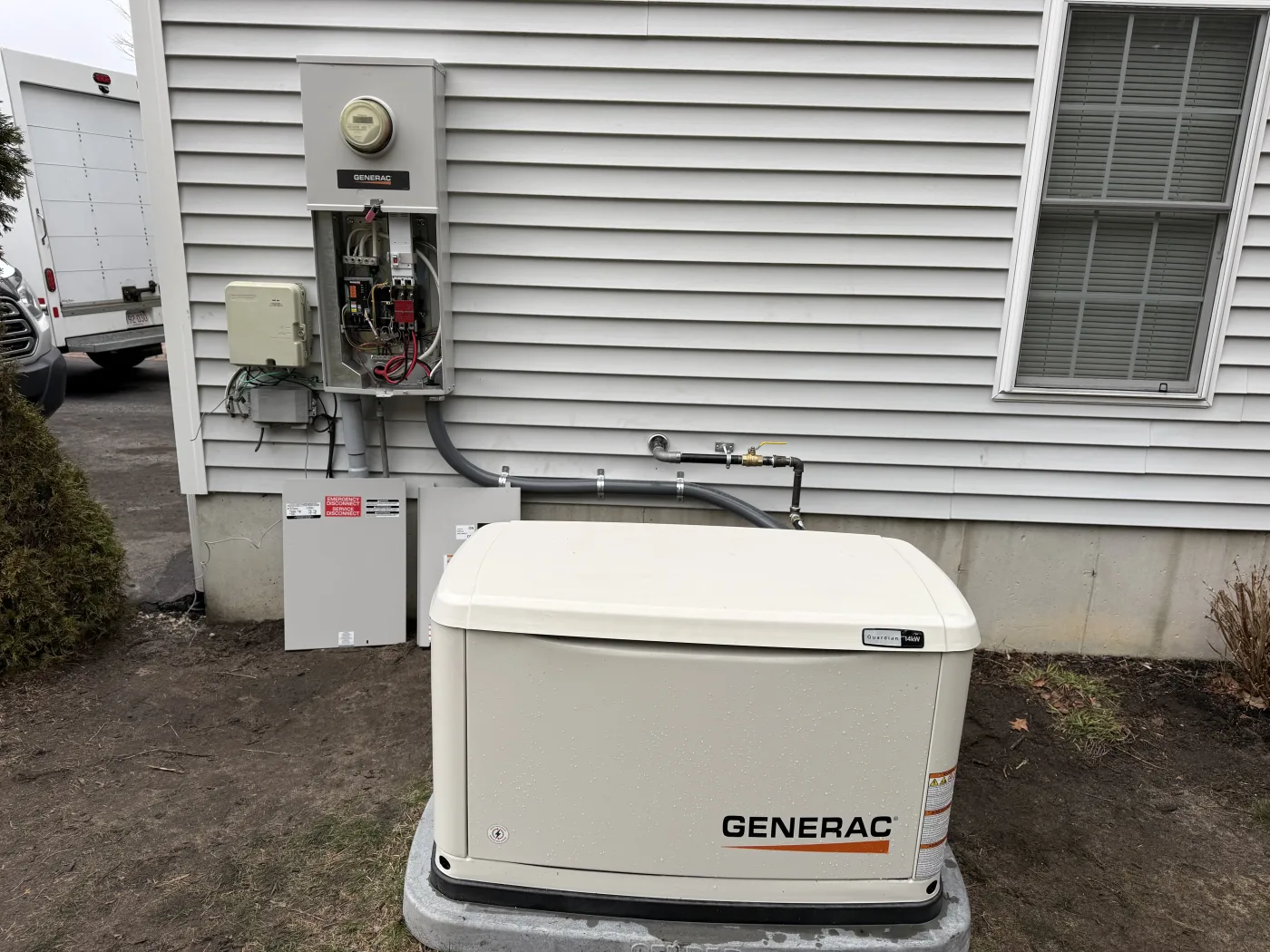
Diagnostic, repair, and load test on the same visit when possible.
Diagnostic and fault history review
Tyler connects to the controller, reads the complete event log, and tests the unit under load. The diagnosis is verbal and written before any parts are ordered.
Fixed-price repair quote
Parts and labor quoted in writing before the work starts. Common fault repairs are done same-day from truck stock. Specialty parts ship within two to three business days.
Repair, exercise cycle, and load test
Repair completed, unit run through a full exercise cycle with your home’s load on generator power. Tyler doesn’t leave until the unit passes its own test.
Generator repair questions Tyler gets on every service call.
For anything not answered here, call or text Tyler at (508) 818-3165 or send details through the contact form. See recent work in our gallery.
My generator won’t start. What’s usually causing that?
The most common causes of a no-start on a Generac air-cooled unit are: a dead or weak battery (especially after a winter where the unit didn’t exercise), a fuel delivery problem (low LP tank, gas valve not opening, carburetor issue), or an overcrank fault logged in the controller that has to be cleared before the unit will attempt to start again. A less common but important one is a failed exercise run that the unit logged as a shutdown fault, which latches and prevents the next start until the fault is acknowledged. When you call, Tyler will ask you for the fault code on the display, whether the unit cranked at all or stayed silent, and whether it’s been exercising on its weekly schedule. That narrows it down before he arrives, and in some cases he can walk you through a safe reset over the phone.
Does my Generac repair qualify for warranty coverage?
If your unit is within Generac’s factory warranty period (5 years on residential air-cooled Guardian units when registered within 30 days of install; 3 years if not registered) and the failure is a covered component, the parts cost is a Generac warranty claim. As a certified warranty technician, Tyler handles the claim directly: the parts ship to the shop, labor is credited through Generac’s warranty portal, and you pay no parts cost. Labor rates on warranty work follow Generac’s published schedule, which covers a portion of the diagnostic and repair time. To confirm coverage, Tyler needs the unit’s model and serial number plus the install date. If you don’t have those handy, the serial is on the label inside the unit housing.
How long does a typical repair take?
Most common fault repairs, including battery replacement, carburetor rebuild, sensor replacement, and transfer switch relay replacement, are same-visit repairs. Tyler carries the most common Generac fault parts in his truck, so a battery swap or carburetor kit install typically takes two to three hours on-site including the pre-repair diagnostic and the post-repair load test. Controller board replacements or transfer switch replacements that require parts not in truck stock are usually completed within three to five business days once parts ship. Tyler will give you a realistic timeline on the diagnostic visit and won’t ask you to commit to a repair scope without a fixed-price written quote first.
My generator runs but my house didn’t pick up power during the outage. What happened?
That’s almost always the automatic transfer switch, not the generator engine. The ATS is the device that senses utility voltage loss, signals the unit to start, waits for stable generator voltage, and then throws the physical transfer to move your home’s load from utility to generator. If the ATS sensing relay has failed, the switch never gets the signal to transfer even if the generator is running perfectly. Other causes include a transfer mechanism that’s bound up mechanically, a controller communication fault between the ATS and the generator panel, or, occasionally, a generator that’s reaching stable voltage but outside the frequency tolerance the ATS is looking for. Tyler can diagnose and test the full transfer sequence on-site. If the ATS needs replacement and the unit is under warranty, that’s a warranty claim he handles directly.
Can you service any generator brand, or only Generac?
Tyler’s certification and parts stocking are Generac-focused, and Generac is the brand he sees most often in southeastern Massachusetts. He can diagnose and perform basic maintenance on other major brands including Kohler, Briggs and Stratton, and Champion air-cooled units, though warranty work on non-Generac units has to go through that manufacturer’s own service network. If you have a Kohler or another brand and need a diagnostic, reach out through the contact form with the model and the fault you’re seeing, and Tyler will tell you honestly whether it’s a job he can take on or whether you’re better served by that brand’s dealer network.
Generator down? Tyler can diagnose and fix it.
Generac certified, master-licensed, and set up to do same-day repairs on most common fault categories. Call, text, or fill out the contact form and Tyler will get back to you the same day.
Other Hopkins Electric services and service areas
Generator repair is one of several electrical services Tyler runs out of Taunton. Browse related services or jump to your town.