Skip to content
Service · EV Chargers

Level 2 EV charger installation.

Dedicated 240V circuits, Mass Save rebates, and panel coordination. We do a real load calculation before we add the EV circuit so the panel doesn’t trip on the first overnight charge.

  • Electrician licensed 2024
  • Generac dealer + warranty tech
  • Panasonic Gold mini split installer
  • Mass Save partner · Insured & bonded
Modern home garage with EV charger installation by Hopkins Electric in Taunton MA Residential · EV charger
  • Massachusetts Electrician
  • Generac Dealer + Warranty Tech
  • Panasonic Gold Mini Split Installer
  • Mass Save Partner
EV install scope

Sized right, permitted, rebate-filed.

An EV charger draws 30-60A continuous. That is a serious add-load on an older 100A or even 200A panel that’s already running heat, kitchen, and laundry. Most install issues come from skipping the load calculation and dropping the breaker on the first overnight charge.

Real load calculation. We measure your existing panel demand and decide whether you need a panel upgrade first or whether a 50A circuit fits. No guesswork.

Hardware-agnostic install. We install the charger you bought (Tesla Wall Connector, ChargePoint, Wallbox, JuiceBox, etc.) or recommend one if you haven’t picked. NEMA 14-50 outlets supported for swap-friendly installs.

Mass Save rebates. Some MA utilities rebate part of the EV install cost. We file the paperwork on your behalf where eligible.

Panel coordination. If your service is at capacity, we’ll tell you straight that the panel needs an upgrade first, and we’ll bid both jobs together at a fixed price.

Garage and exterior installs. Hardwired or NEMA 14-50, exterior weather-rated installs, conduit and disconnect within sight of the charger per code.
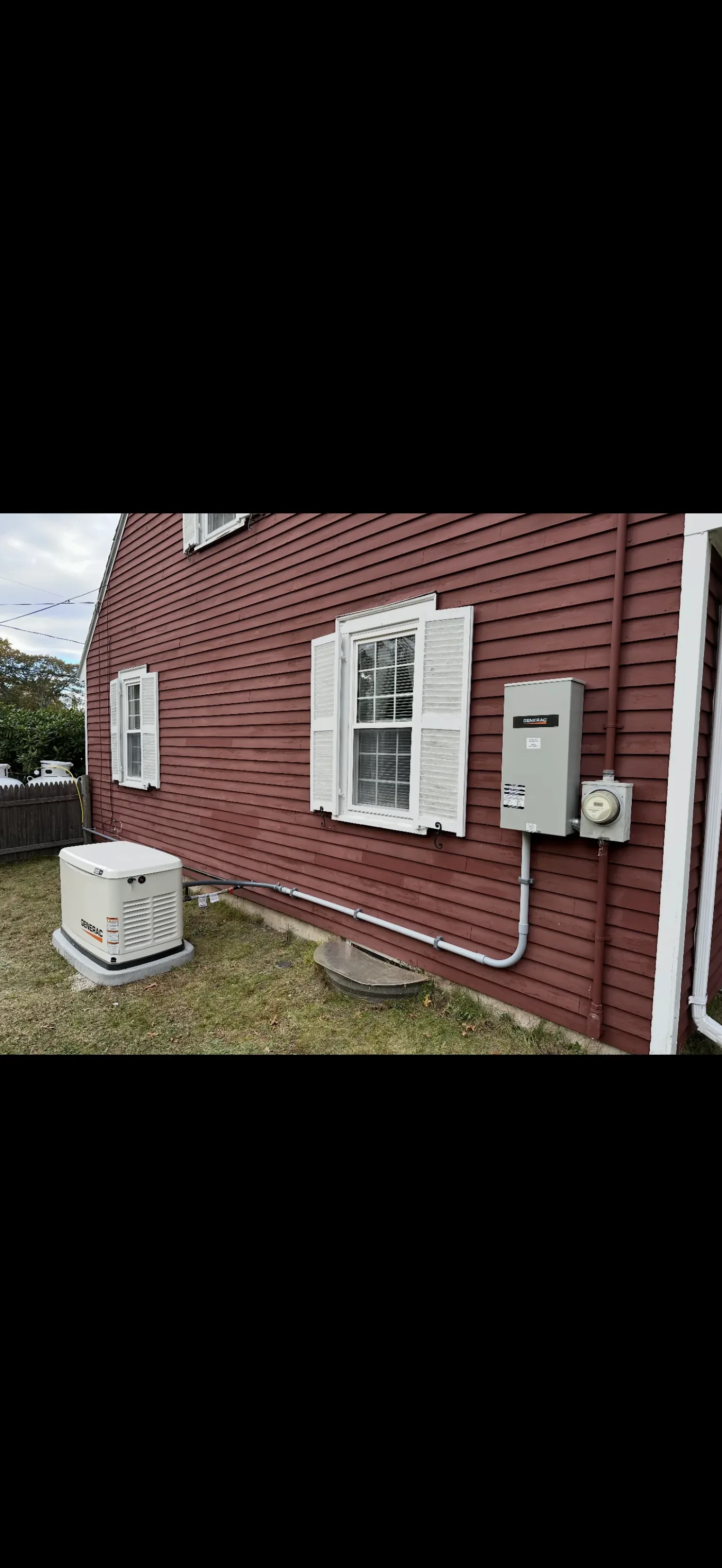
Level 2 home charging cuts the time-to-full-charge on a Tesla Model 3 or a Rivian R1S from twenty-four hours on a Level 1 trickle to four to eight hours overnight on a 32A or 48A circuit — and the install is straightforward when it’s done right. It’s also a fire hazard when it’s not. Hopkins Electric runs Level 2 EV charger installations across Taunton, Brockton, Fall River, Attleboro, Randolph, Stoughton, and the rest of Bristol, Plymouth, and Norfolk counties — Tesla Wall Connector hardwires, ChargePoint Home Flex, Wallbox Pulsar Plus, and Grizzl-E hardwires, plus NEMA 14-50 receptacles for Tesla Mobile Connectors and adapter-cord setups. Tyler runs the conduit (interior surface, exterior wall, fished through the rim joist, or attic-routed depending on the panel-to-garage geometry), sizes the breaker to the charger nameplate per NEC 625 (typically a 50A or 60A breaker on 6 AWG or 4 AWG copper), terminates either on a NEMA 14-50 receptacle or directly into the unit’s terminal block, GFCI-protects the circuit per the latest NEC amendments, and labels the new circuit on your panel diagram.

Dedicated EV charger circuit and panel work on a Taunton, MA home
EV circuitDedicated EV charger circuit and panel work on a Taunton, MA home

Charger selection — Tesla Wall Connector, ChargePoint, Wallbox, Grizzl-E

Tesla Wall Connector is the obvious pick if you have a Tesla — hardwires at 48 amps continuous (11.5 kW), supports a 24-foot cable, and integrates seamlessly with the Tesla app for charge scheduling. ChargePoint Home Flex hardwires up to 50 amps and supports any J1772-compatible vehicle (Ford, GM, Hyundai, Kia, Volkswagen, Polestar, Rivian via included adapter), with strong app-based scheduling and rebate-eligibility for some MA utility programs. Wallbox Pulsar Plus is a strong second-place pick at the 32-40A continuous range, smaller form factor, integrates with home-energy systems (particularly Span panels). Grizzl-E classic is the workhorse hardwire option — no app, no smart features, just a robust 40A continuous charger that outlasts most competitors. We help you pick based on your specific vehicle, garage layout, panel headroom, and whether you want app-based scheduling or just-plug-it-in simplicity.

Hardwire versus NEMA 14-50 receptacle — when each one is right

Hardwire installs run directly from the panel to the unit via THHN-2 or XHHW-2 conductors in EMT or rigid conduit — the NEC 625.42 path that supports up to 48 amps continuous on a 60-amp breaker (charger MCA × 1.25 derating). Receptacle installs use a NEMA 14-50 outlet on a 50-amp breaker, which derates per NEC 210.21 to 40 amps continuous (50A breaker × 80%). Hardwire is mechanically tighter, has fewer failure points, and supports the highest charging rates available in residential. Receptacle is more flexible — you can unplug the unit, take it on a road trip, or swap chargers without an electrician — but caps you at 32A continuous and has been linked to a small-but-non-zero rate of overheating failures with cheap NEMA 14-50 outlets under continuous full-load. We default to hardwire unless you specifically want the flexibility of the plug. If you want the receptacle, we install a Hubbell HBL9450A or a Bryant 9450FR commercial-grade receptacle, not a cheap builder-grade outlet.

Panel-to-garage routing — interior conduit, exterior runs, attic feeds, basement runs

Most southeastern Massachusetts homes have the main panel in the basement and the EV charger lives in an attached garage. We run conduit through the basement ceiling joists to the rim joist, then through a sleeved penetration into the garage, then surface-mounted EMT conduit up the wall to the charger location. For garages without a basement below (slab on grade, cape with an unconditioned garage), we run conduit up an interior wall, across the attic, and down the garage wall — or, for exterior runs, in rigid steel or weatherproof PVC stub-up. We never bury Romex/NM-B in conduit between two buildings — that’s an NEC violation and we won’t sign the permit. Exterior runs use rigid metallic conduit or schedule-80 PVC sized to allow conductor pulling without exceeding fill ratios in 314 and 358.

GFCI requirements, breaker sizing, and the 2020 NEC update on EV charger circuits

The 2020 NEC amendment to 625.54 requires GFCI protection on the EV charger circuit, and Massachusetts adopted that amendment with the 9th-edition state code update. Most modern EV chargers (Tesla Wall Connector Gen 3, ChargePoint Home Flex, Wallbox Pulsar Plus) integrate Class A GFCI protection in the unit itself, in which case we use a standard inverse-time circuit breaker. If the unit doesn’t carry onboard GFCI (older Grizzl-E, some Wallbox Pulsar revisions), we install a GFCI breaker — Square D QOB GF, Eaton CH GFEP, or Siemens BLEN — sized to the charger’s MCA × 1.25. Breaker sizing for continuous loads (continuous = three hours or more at full load, which describes EV charging exactly) follows NEC 210.20: breaker rating must be at least 125% of the continuous load. A 48-amp continuous unit gets a 60-amp breaker; a 40-amp continuous unit gets a 50-amp breaker; a 32-amp continuous unit gets a 40-amp breaker.

Permits, inspections, and Massachusetts utility rebates for EV charger installs

EV charger installs in Massachusetts pull an electrical permit (cost varies by town) and an inspection by the wiring inspector. Tyler files in his master’s name and walks the inspector through the work — particularly the GFCI compliance and the breaker sizing, which are the two most-flagged items on EV install inspections. Both Eversource and National Grid run rebate programs for residential EV charger installs at varying tiers-qualified installs). National Grid’s ChargeReady and Eversource’s EV charger rebate require an in-territory electrician install on a permitted circuit — both of which we already include — and we provide the documentation package the rebate program needs.

Level 2 EV charger installs across Taunton, Brockton, Fall River, Attleboro, Randolph, Stoughton, and the rest of Bristol, Plymouth, and Norfolk counties. Most installs run fixed-price turnkey including the charger (Tesla Wall Connector or ChargePoint Home Flex pricing), permit, conduit run, breaker, GFCI compliance, and final inspection. Lead time from signed quote to plugged-in is typically two to three weeks depending on charger availability and inspector scheduling. We pull the rebate paperwork through Eversource or National Grid on your behalf where applicable.

EV install workflow

Most installs complete in a single day.

01

Walk-through + load calculation

We measure your panel, confirm capacity, spec the circuit. Free fixed-price scope.

02

Permits + Mass Save filing

Permits filed, rebate paperwork filed if eligible, equipment ordered.

03

Install + commissioning

Circuit run, charger mounted, GFCI tested, charge cycle verified before we leave.

Frequently asked

Common questions before booking.

For anything not answered here, the fastest reply is texting Tyler at (508) 818-3165 or sending project details through the contact form. Visit our gallery for recent work.

Do I need a panel upgrade for an EV charger?

Maybe. We measure your existing demand. If you’re at 70%+ capacity already, the EV will push you over and a panel upgrade is the safer move. If you have headroom, a dedicated 50A circuit usually fits.

Hardwired or NEMA 14-50 outlet?

Both work. Hardwired is cleaner for a permanent setup; NEMA 14-50 is more flexible if you might swap chargers later. We’ll bid either.

Does Mass Save rebate EV charger installs?

Some utilities do. We check eligibility during the walk-through and file the paperwork on your behalf if it qualifies.

Are you licensed?

Yes. Tyler Hopkins is a Massachusetts Electrician (license earned 2024). Hopkins Electric LLC is fully insured and bonded. We pull permits in the Electrician’s name on every job that requires one.

Do you pull permits?

Yes, on every job that requires one. We file with your town inspectional services office, attend rough-in and final inspections, and close out the permit when the work passes. Permits are included in the fixed-price scope.

Explore more

Other Hopkins Electric services + areas

EV Charger Installation is one of seven specialty services Tyler runs. Browse the full menu of services or jump to your town to see what we cover locally.

Get a fixed-price quote

Tell Tyler about your ev charger installation project

Every ev charger installation quote is a walk-through with the electrician — not a templated form-fill from an specialist. Tyler arrives with a meter, walks the panel, talks through the scope, and emails a fixed-price proposal the same day or next morning.

  • Electrician. Tyler runs every quote himself.
  • Fixed-price scope. Written proposal, no “time + materials surprise” billing.
  • Permits in master’s name. Filed with the city, inspected, signed.
  • Same-day reply. Most quotes go out within hours of the visit.
Prefer to talk now? Call or text Tyler at (508) 818-3165. Email office@hopkinselectric-ma.com.

Request a quote

Same-day reply

Or text/call (508) 818-3165 for emergencies.

Ready when you are

Get an EV charger quote.

Free walk-through, real load calculation, Mass Save rebate filing. Electrician on every install.