Plenty of electrical work in a house is a homeowner job, and we are not going to pretend otherwise. Reset the breaker. Swap the fixture. Replace a switch on a circuit you turned off and tested. The line is about heat, about the service entrance, and about anything that has already failed once. When a circuit makes heat, trips repeatedly, smells, or lives on the utility side of your main, that is where a license, a permit and insurance start to matter.
There is a particular kind of advice online that treats every homeowner as a hazard and every job as a call. It is not honest and nobody believes it. A person who can hang a ceiling fan can hang a ceiling fan.
The useful version of this conversation is narrower. There are a handful of specific signs that mean stop, and there is a short list of work where the difference is not skill but authority: permits, insurance, and the ability to get a meter pulled. Everything else is a judgment call you are allowed to make.
What Is Genuinely Yours
Resetting a breaker that tripped once. Pressing test and reset on a GFCI. Changing the batteries in a detector. Unplugging things and checking whether the neighbors are dark too. Photographing the inside of your panel door so you have the circuit list when you do call. Turning a breaker off and leaving it off, which is always available to you and is the right move more often than people think.
Past that, Massachusetts is stricter than most people expect. There is no homeowner exemption in the state electrical licensing law the way there is for some other trades, and electrical permits are issued to licensed electricians, not to property owners. That is not our rule and we do not enforce it. It is worth knowing before you start a Saturday project, because the consequences show up later, at a home sale or an insurance claim, rather than on the day.
So the practical line is less about what you are capable of and more about what happens afterward. A fixture swap that goes fine is invisible. The same swap on a circuit that turns out to be ungrounded, or on a device that comes out of the wall discolored and brittle with the insulation crumbling off the conductors, has stopped being a swap, and now it is undocumented work in a house you will eventually sell.
The Tells That Mean Stop
These are the ones worth memorizing, because each one means something is already failing rather than something is inconvenient.
A warm faceplate or switch. A cover plate, switch or outlet that is warm to the touch is a connection making heat instead of passing current, and heat degrades the connection, which makes more heat. Shut that breaker off and leave it off.
A breaker that trips again within minutes. One trip is the device doing its job. A second trip right after a reset means it is interrupting a real fault. Forcing it closed repeatedly damages the breaker and can damage the bus behind it.
Any scorch mark or brown staining. On a device, a plate, a panel cover, or a cable. That mark is a record of an event that happened, and the cause is still there.
A buzzing or humming panel. A panel should be silent. A buzz means a loose connection or a breaker that is failing to seat properly on the bus, and the panel is the one place in the house where you cannot turn the power off to look.
A burning or fishy smell near anything electrical. Overheated plastic has a distinct smell. If you notice it and cannot find a source, that is a same day call.
Two prong outlets. Not an emergency, but a real signal. Ungrounded outlets usually mean older wiring behind them, sometimes cloth insulated, and a correct fix depends on what is actually in the wall rather than on what shape the outlet is.
Anything at the meter or the service entrance. No exceptions, and the reason is in the next section.

Why the Service Entrance Is Different
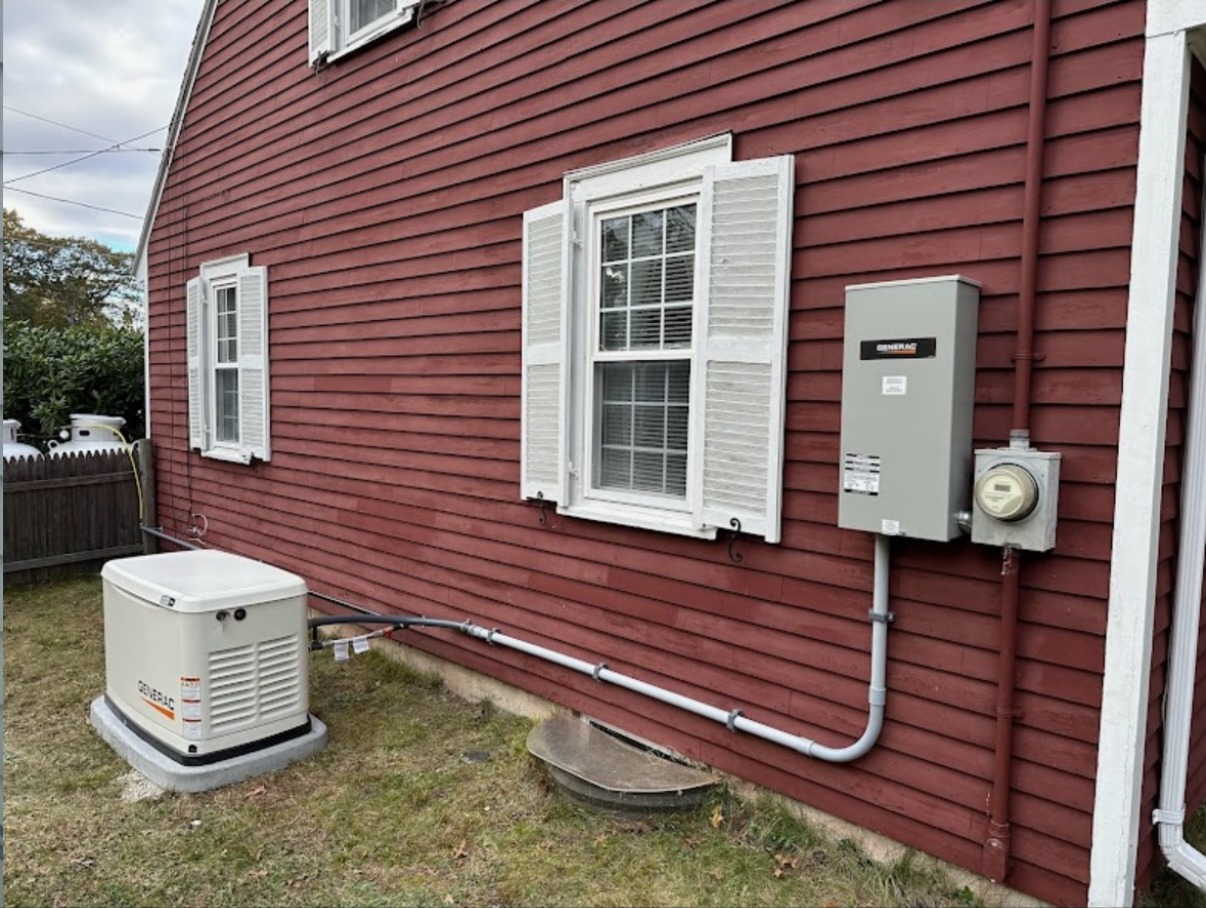
Your main breaker protects everything downstream of it. Nothing in your house protects what is upstream. The conductors coming from the utility into your meter socket, through to the main lugs, are live at full available current with no breaker between them and the transformer on the street, and they stay live when your main is switched off.
That means the meter, the meter socket, the service conductors, the weatherhead and the main lugs are a genuinely different category of work. It is not that a homeowner lacks the dexterity. It is that there is nothing to shut off, and the only way to make that area safe is to have the meter pulled, which requires coordination with Eversource.
That coordination is one of the things a licensed electrician actually carries. So is permit authority: electrical permits in Taunton are pulled by a licensed electrician, and work that should have been permitted and was not tends to surface at the worst possible time, during a sale or an insurance claim. The third thing is liability insurance, which is the part nobody thinks about until a fire investigator asks who did the work.
The Ones People Get Wrong in Good Faith
A few jobs look like homeowner work and are not, and they come up often enough to name.
Adding a circuit or extending one. The wire has to be sized to the breaker, the box fill has to be right, the cable has to be supported and protected, and the whole thing lands in a panel you have to open. This is permit work.
Replacing a breaker. Breakers are not universal, and the wrong breaker in a panel is both a code violation and a real hazard because the panel manufacturer never tested that combination. This also means opening the panel, where the lugs stay live.
Anything in a kitchen, bath, garage, basement or outdoors where the protection is upstream. Those areas have specific requirements, and a device swap that quietly removes protection from four other outlets downstream is a common accident.
Aluminum branch wiring. If you find it, stop. It needs specific connectors and specific technique, and a standard wire nut on aluminum is one of the more reliable ways to start a fire.
Anything in a house that still has a fuse box or a load center from a brand insurers ask about. At that point you are not fixing a circuit, you are deferring a panel upgrade, and it is worth knowing that.
What to Do in the Twenty Minutes Before You Call
Shut off the breaker for whatever is misbehaving and leave it off. If you cannot identify which breaker, and something is warm or smells, shut the main.
Photograph the panel with the door open, plus whatever you are worried about. Note when it started and what changed, a new appliance, a storm, a room being used differently. Then write down what you already tried, because that shortens the visit more than anything else.
If the symptom is no power, exposed wiring or a burnt outlet, say so when you call. Those are emergency calls and they jump the line, frequently same day. Routine work gets scheduled as soon as the calendar allows, and Taunton is home ground rather than the edge of the map.
Questions Homeowners Ask
Do I really need a permit for small electrical work?
In Massachusetts, more often than people assume. Permits are issued to licensed electricians, not to homeowners, so the permit and the license travel together. A new circuit, a panel change or anything tied into your service equipment is squarely in that territory. Unpermitted work tends to surface during a home sale or an insurance claim, which is a bad moment to discover it.
My outlets are two prong. Is that urgent?
Not urgent, but do not just swap in three prong outlets. A three prong outlet on ungrounded wiring looks correct and lies to everything you plug into it. The honest options are a proper ground, or GFCI protection labeled as ungrounded, and which one makes sense depends on what is behind the wall. Worth a look before you guess.
Can you tell me over the phone whether it is serious?
Often, yes. Warm, buzzing, scorched or repeatedly tripping gets treated as urgent regardless of what else is going on. A single dead outlet or one trip that reset cleanly usually does not. Call and describe it plainly, and if it can wait we will say so rather than sell you a visit.
None of this is about gatekeeping a screwdriver. It is about knowing which signs mean a circuit is already failing, and which part of the system has nothing upstream to turn off. Troubleshooting is most of what this work actually is, and the list of services for the whole area is on the Taunton page.
Not sure which side of the line you are on?
Describe what the house is doing and Tyler will tell you straight whether it can wait, whether it is a homeowner fix, or whether somebody should be looking at it today.
Free Quote Call Tyler (508) 818-3165Emergency panel repair · Panel upgrades · Get in touch · Recent work