Whole-Home Generators for New Bedford’s Coastal Storms
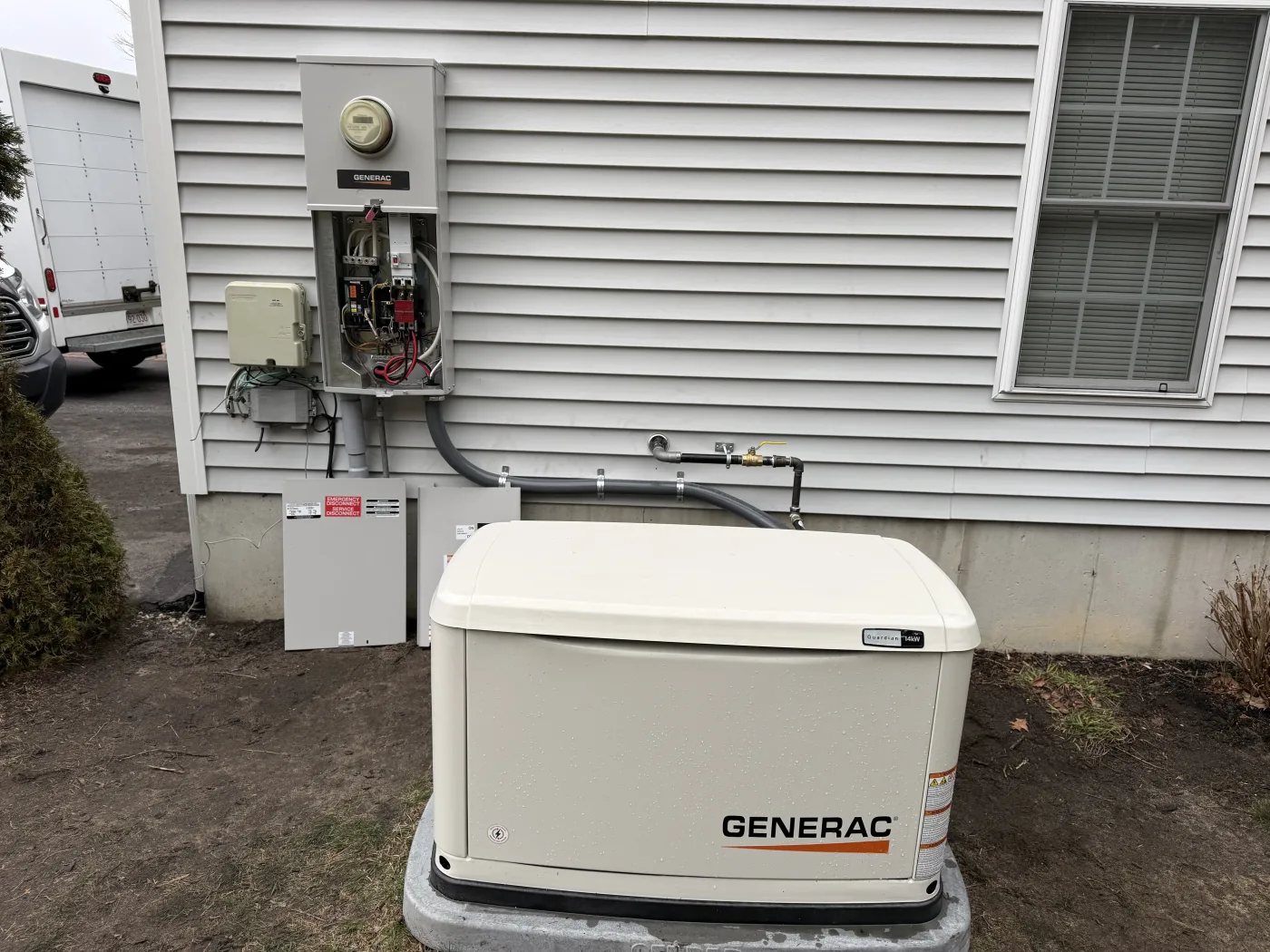
New Bedford sits right on Buzzards Bay, which means nor’easters and the occasional hurricane knock the power out here more than most of the state. A whole-home standby generator wired to an automatic transfer switch starts on its own within seconds of an outage and runs your whole house, unlike a portable you have to drag out in the storm. As a Generac dealer and certified warranty technician, I size the unit to your actual home, run it on natural gas or propane, and quote it fixed-price in writing after I see your setup.
If you have lived in New Bedford through a real nor’easter, you know the drill. The wind comes off the bay, a limb takes a line down somewhere along the grid, and the whole street goes dark for hours or days while Eversource works its way through the outage list. In the North End and out toward Clarks Cove and the hurricane barrier, that is not a rare event. It is a season.
I am Tyler Hopkins, Master Electrician and owner of Hopkins Electric. I work New Bedford and the surrounding southeastern Massachusetts towns out of Taunton, and I am a Generac dealer and a Generac certified warranty technician. That means I do not just install these units, I stand behind them and service them. Let me walk you through why a whole-home standby beats a portable in a coastal storm, how the fuel choices work, what the transfer switch actually does, and how sizing gets decided.
Why Buzzards Bay makes standby power worth it
New Bedford’s location is beautiful and it is exactly why the power goes out. The city fronts Buzzards Bay, and that open water funnels coastal storms straight at the shoreline. Nor’easters roll through fall and winter with the kind of sustained wind that brings down tree limbs and overhead lines, and hurricane season adds its own threat every late summer and fall. The hurricane barrier protects the harbor from surge, but it does nothing for the wind that takes out the grid.
When an outage hits a dense, older city like this, restoration takes time. Eversource has to work through a lot of downed lines across a wide area, and the older neighborhoods with overhead service are often not first on the list. A day or two without power in July is miserable. In February, with a heat system that needs electricity to run, it is a real problem, and for anyone on medical equipment or with a home business it is worse than an inconvenience.
That is the case for standby power in this specific city. It is not a luxury toy. For a lot of New Bedford homeowners it is the difference between riding out a storm in a warm, lit house and packing the family into the car to find a hotel with power. If you want the full service detail, my whole-home generator page for New Bedford lays it out.
Whole-home standby versus a portable
A portable generator has its place, but it is the wrong tool for the storms this city gets. To use one you have to go outside in the weather, fuel it, start it, run cords, and keep refueling it every several hours around the clock, including the middle of the night. It powers a few things, not your house, and running one too close to the home or in an attached space is a genuine carbon monoxide danger.
A whole-home standby generator solves all of that by being permanent and automatic. It sits on a pad beside your house, wired into your electrical system through an automatic transfer switch. When the power drops, it senses the outage, starts itself within seconds, and carries your home. When Eversource restores the grid, it senses that too, hands the load back, and shuts itself down. You do not touch it, you do not fuel it in the storm, and you are not awake at three in the morning topping off a gas tank.
Because it runs on your natural gas line or a propane tank, it does not need you to store or handle fuel during the event. For a family that just wants the lights, the heat, the fridge, and the well or sump pump to keep running through a nor’easter, that hands-off, whole-house coverage is the entire point.
Natural gas or propane, and what the transfer switch does
The fuel question comes down to what your home already has. If you have a natural gas line, running the generator off gas is usually the simplest path, because there is no tank to fill and the supply is effectively unlimited as long as the gas keeps flowing. If your home is not on gas, which plenty of New Bedford homes are not, propane is the answer, fed from a tank sized to run the generator through a multi-day outage.
I walk through this with you on the visit, because the right choice depends on your utilities, your yard, and how long an outage you want to plan for. Both fuels power the same units well. The decision is about your specific property, not a one-size answer.
The automatic transfer switch
The transfer switch is the piece that makes the whole thing automatic and safe, and it is not optional. It sits between your utility service and your panel, and it does two critical jobs. First, it senses the outage and tells the generator to start, then moves your home’s load onto the generator. Second, and just as important, it electrically isolates your house from the grid while the generator runs. That isolation is what protects the Eversource line workers who may be repairing the very lines that feed your street. A generator wired without a proper transfer switch can back-feed the grid and injure or kill a lineman, which is exactly why this is licensed electrician work and not a weekend project.
Sizing the unit to your actual New Bedford home
Sizing is where a real installer earns the job. Buy too small and the generator cannot carry your loads and struggles. Buy too big and you paid for capacity you will never use. The right size comes from what you actually run, and that is why I do a load assessment rather than guess from square footage.
Here is what goes into that decision on a New Bedford home.
- Your heat source and whether it needs electricity to run, which almost all modern systems do
- Central air or window units you want kept running in a summer outage
- The well pump or the sump pump, which for a lot of these homes is non-negotiable during a storm
- The kitchen, the fridge, and any electric range or cooking load
- Medical equipment, a home office, or anything you truly cannot lose
- The size of your electrical service, since the generator and transfer switch have to match your panel
Some homeowners want the whole house covered no matter what, and some want the essentials carried so they can size the unit down. Both are valid, and part of my job is helping you decide which one fits your home and your budget. Whatever you choose, I make sure the generator, the transfer switch, and your New Bedford home’s electrical service all line up so the system works when the storm actually comes.
Want to stay powered through the next nor’easter?
I am a Generac dealer and certified warranty technician, so I install, service, and stand behind the unit. I will assess your loads, walk your fuel options, and put a fixed price in writing before any work starts. I cover New Bedford and all of Bristol County out of Taunton.
New Bedford generator questions
How fast does a standby generator kick in during an outage?
Within seconds. A whole-home standby generator wired to an automatic transfer switch senses the outage the moment the grid drops, starts itself, and moves your home onto generator power, usually inside about ten to thirty seconds. You do not have to be home, awake, or anywhere near it. When Eversource restores power, the system senses that too, hands the load back to the grid, and shuts the generator down on its own.
Natural gas or propane for a New Bedford generator?
It depends on what your home already has. If you have a natural gas line, running the generator off gas is usually simplest because there is no tank to fill and the supply keeps flowing. If your home is not on gas, which many New Bedford homes are not, propane fed from a properly sized tank is the answer. Both power the units well. I walk your utilities and yard on the visit and help you pick the right one for your property.
Do I really need a transfer switch, or can I just wire it in?
You absolutely need one, and it is not optional. The automatic transfer switch starts the generator, moves your home’s load onto it, and electrically isolates your house from the grid while the generator runs. That isolation protects the Eversource line workers repairing the lines that feed your street. A generator wired without a proper transfer switch can back-feed the grid and injure or kill a lineman, which is why this is licensed electrician work.
What size generator do I need for my home?
The right size comes from what you actually run, not your square footage. I do a load assessment covering your heat, any air conditioning, the well or sump pump, the kitchen and fridge, and anything medical or work-related you cannot lose. Some homeowners want the whole house covered and some want the essentials carried so they can size down. Both are valid, and I help you decide which fits your home before I quote anything.
What does a whole-home generator cost in New Bedford?
There is no single number, because it depends on the size of the unit, your fuel choice, the transfer switch, and how your electrical service is set up. I come out, assess your loads, walk your fuel and placement options, and quote the whole installation fixed-price in writing before any work starts. As a Generac dealer and certified warranty technician, I also service and stand behind what I install.